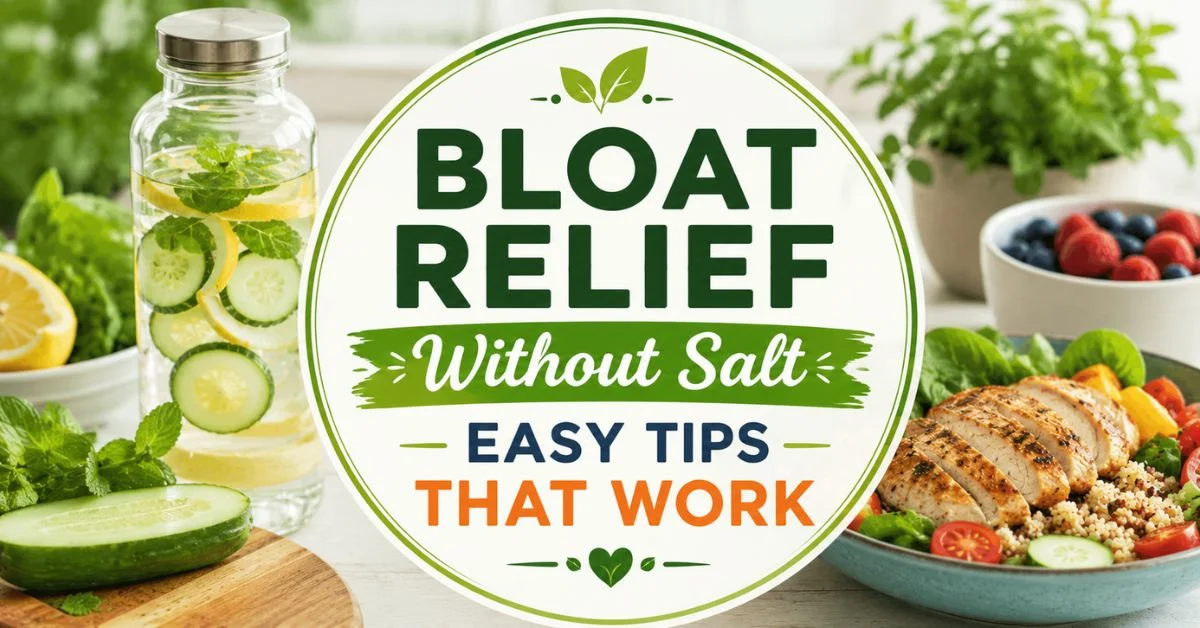
Bloat Relief Without Salt: Easy Tips That Work
Feeling bloated after a salty meal can make your stomach feel tight, heavy, and uncomfortable. Many people try quick online remedies, including popular salt water drinks, hoping for fast relief. But in many cases, adding more salt can actually increase water retention and make bloating worse.
The good news is that there are simple and natural ways to support bloat relief without salt. Small changes in your daily habits, food choices, and cooking methods can help your body feel lighter and more balanced without giving up flavor.
In this guide, you’ll learn what causes salt-related bloating, why excess sodium affects digestion, and how to reduce puffiness naturally. We’ll also cover easy low-sodium food ideas, hydrating ingredients, natural flavor boosters, and healthy lifestyle tips that can help support better digestion and everyday comfort. Whether your bloating happens after meals or throughout the day, these practical tips can help you feel refreshed and energized again.
Why Too Much Salt Can Make Bloating Worse?
Understanding How Salt Causes Water Retention
If you often feel swollen or uncomfortable after eating salty foods, excess sodium may be one of the main reasons. Salt affects how your body manages fluids, and too much of it can lead to water retention and bloating.
When sodium levels rise, your body tries to keep the right balance of fluids. To do this, it holds onto extra water. This extra fluid can collect in different parts of the body, including your stomach area, hands, feet, and even your face. As a result, you may notice a tight belly, puffiness, or a heavy feeling after meals.
This process happens because water naturally moves toward areas with higher sodium levels. Your kidneys then work harder to remove the extra sodium and fluid from the body, which can leave you feeling sluggish and uncomfortable.
One of the biggest challenges is that sodium is hidden in many everyday foods. Even meals that do not taste very salty can contain large amounts of sodium. Common hidden sources include:
- Packaged snacks
- Canned soups
- Frozen meals
- Fast food
- Salad dressings
- Bread and bakery items
- Processed sauces and seasonings
Because sodium is found in so many processed foods, bloating can happen even when you are not adding extra salt at the table. Learning where hidden sodium comes from is an important step toward finding natural bloat relief without salt.
Hidden Sources of Sodium You May Not Notice
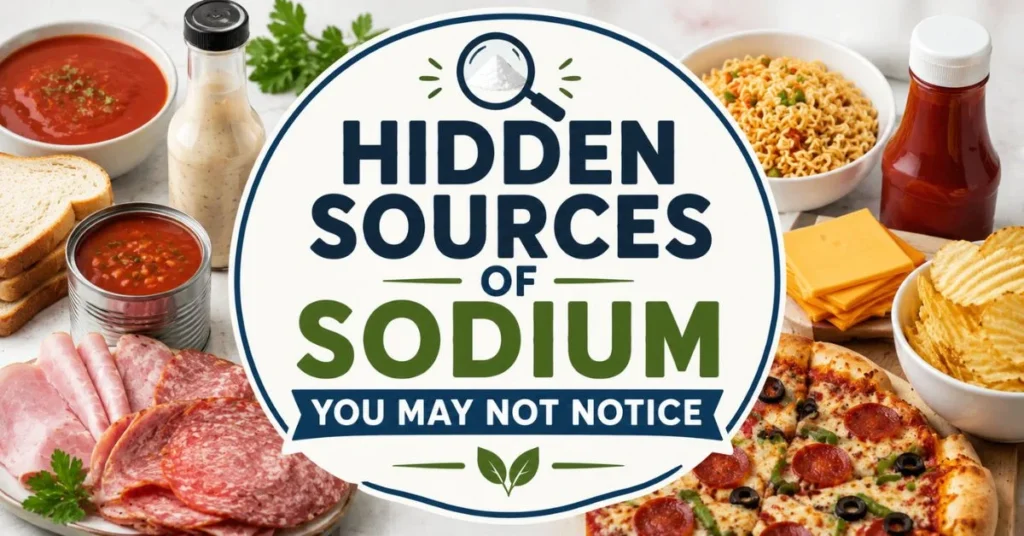
Everyday Foods That Can Increase Bloating
Many people think they only eat a small amount of salt because they avoid adding extra salt to meals. However, a large amount of sodium often comes from packaged, processed, and restaurant foods. These hidden sources can quietly increase bloating and water retention throughout the day.
Some foods may even seem healthy but still contain surprisingly high sodium levels. Knowing where sodium hides can help you make smarter choices for better bloat relief without salt.
Here are some common hidden sodium foods to watch for:
- Restaurant bread and rolls – Many baked items contain added salt in the dough to improve flavor and texture.
- Canned vegetables and beans – These products are often packed with sodium to help preserve freshness.
- Condiments and sauces – Soy sauce, ketchup, barbecue sauce, salad dressings, and pickles can quickly add large amounts of sodium to meals.
- Packaged snacks – Chips, crackers, flavored nuts, and even some veggie snacks may contain more salt than expected.
- Frozen and ready-made meals – Convenience foods are usually high in sodium for flavor and shelf life.
- Processed meats – Deli meats, sausages, and hot dogs are major sources of hidden sodium.
- Certain medications – Some over-the-counter medicines and tablets contain sodium as part of their ingredients.
Reading nutrition labels carefully can make a big difference. Choosing fresh foods, low-sodium options, and homemade meals can help reduce puffiness and support more natural digestive comfort. Small changes over time often lead to noticeable improvements in how your body feels.
Your Salt-Free Flavor Toolkit for Delicious Meals
Easy Ways to Add Flavor Without Extra Sodium
One reason many people struggle to lower sodium is simple: food can seem bland without salt. But reducing sodium does not mean giving up flavor. The key is learning how to build taste in healthier and more natural ways.
Instead of depending on salt alone, you can use fresh ingredients, herbs, spices, and acidic flavors to make meals bright, satisfying, and full of taste. These simple swaps can support bloat relief without salt while still making food enjoyable.
Use Acidic Ingredients to Boost Flavor Naturally
Acidic ingredients help wake up flavors and give foods a fresh, balanced taste. In many dishes, they can replace the sharp flavor people usually expect from salt.
Here are some easy options to try:
- Lemon juice – A squeeze of fresh lemon can brighten vegetables, soups, chicken, and seafood.
- Lime juice – Great for salads, tacos, rice bowls, and fresh drinks.
- Apple cider vinegar – Adds a mild tangy flavor to dressings and marinades.
- Balsamic vinegar – Brings a slightly sweet and rich taste to roasted vegetables and salads.
- White wine vinegar – Adds freshness and balance to lighter dishes.
Adding acidic ingredients to meals can make food taste more vibrant without increasing sodium. A simple citrus dressing or vinegar-based marinade can completely change a dish while helping you avoid the bloated feeling that often comes from salty foods.
Over time, your taste buds adjust, and you may find that fresh flavors become even more enjoyable than heavily salted meals.
Choose the Right Relief Based on Your Type of Bloating
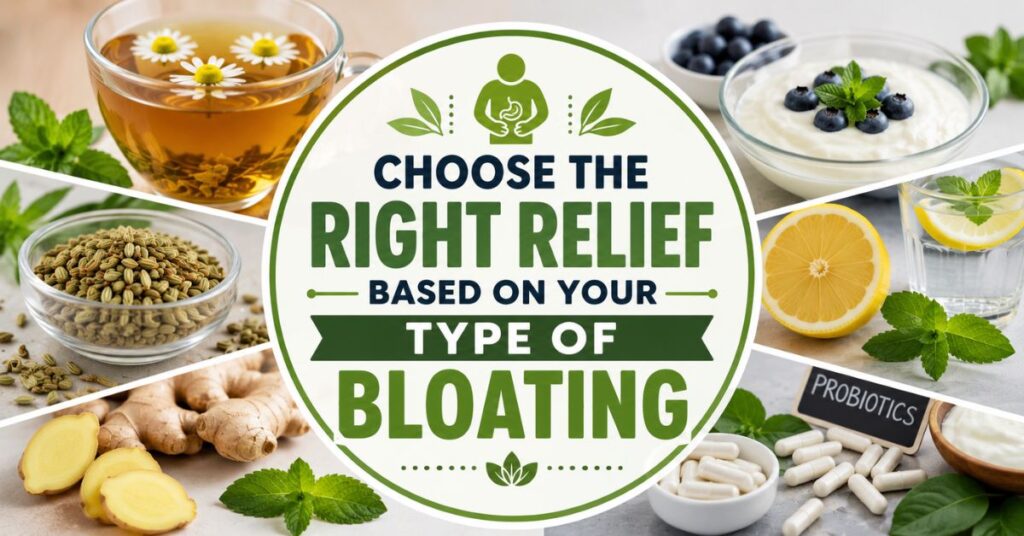
Understanding the Difference Between Water Retention and Gas Bloating
Not all bloating feels the same. Some people feel swollen and puffy after eating salty foods, while others experience stomach pressure, gas, or cramps after meals. Knowing the difference can help you choose the best method for bloat relief without salt.
Before trying random remedies, take a moment to understand what type of bloating your body is experiencing.
Signs of Water Retention Bloating
You may be dealing with water retention if you notice:
- Puffiness in the stomach, hands, feet, or face
- Swollen ankles or fingers
- A heavy or tight feeling after salty meals
- Temporary weight gain from extra fluids
- Feeling sluggish or uncomfortable throughout the day
This type of bloating usually happens when the body holds onto excess water because of high sodium intake.
Natural Ways to Reduce Water Retention
A simple low-sodium routine can help your body release extra fluids naturally.
Start Your Morning With Hydration
Drink a glass of warm water with fresh lemon juice after waking up. This may help support digestion and hydration without adding extra sodium.
Eat More Potassium-Rich Foods
Potassium helps balance sodium levels in the body and may reduce swelling caused by water retention.
Here are some helpful options:
| Food | Serving Size | Potassium |
|---|---|---|
| Banana | 1 medium | 420 mg |
| Avocado | Half avocado | 487 mg |
| Sweet potato | ½ cup cooked | 448 mg |
| Spinach | 1 cup cooked | 839 mg |
| White beans | ½ cup cooked | 502 mg |
Focus on Fresh, Light Meals
Choose meals made with whole foods like:
- Leafy green salads
- Cucumbers and tomatoes
- Grilled chicken or fish
- Oatmeal with fruit
- Unsalted nuts and seeds
Stay Hydrated Throughout the Day
Drinking enough water can actually help reduce water retention. Sip water steadily instead of drinking large amounts all at once.
Move Your Body Daily
A short walk, stretching session, or light exercise can help improve circulation and support the body’s natural fluid balance.
Signs of Digestive Gas Bloating
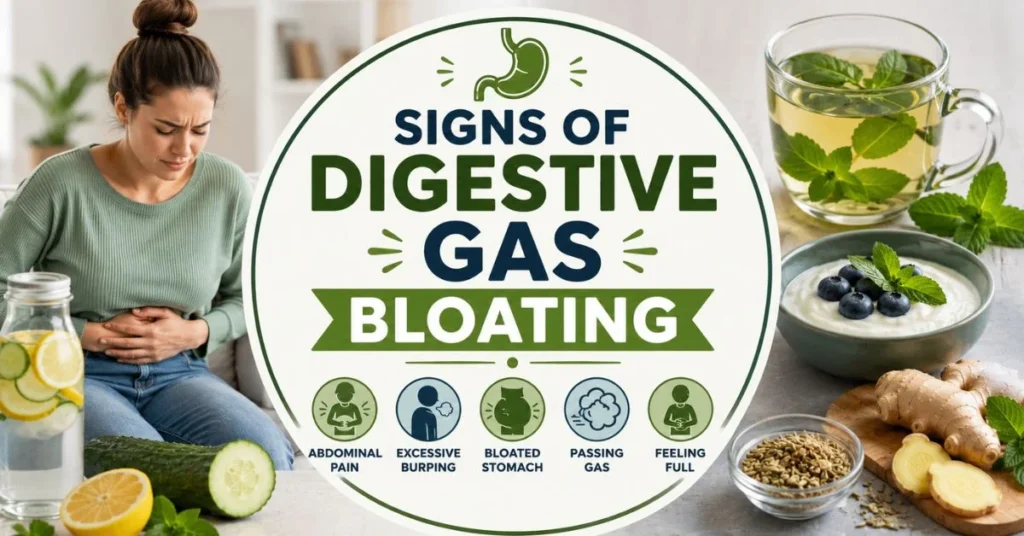
Digestive bloating usually feels different from water retention. You may notice:
- Stomach pressure or tightness
- Excess gas or burping
- Cramping after meals
- Loud stomach sounds
- Irregular bowel movements
This type of bloating is often linked to digestion, certain foods, or eating habits.
Natural Remedies for Digestive Bloating
Peppermint Tea
Peppermint may help relax digestive muscles and reduce stomach discomfort.
Ginger
Fresh ginger or ginger tea may support digestion and help food move more smoothly through the stomach.
Fennel Seeds
Many people chew fennel seeds after meals to help reduce gas naturally.
Simple Herbal Tea for Digestive Comfort
You can make a calming homemade tea using:
- 1 teaspoon crushed fennel seeds
- ½ teaspoon dried peppermint leaves
- 2–3 thin slices fresh ginger
Steep in hot water for 10 minutes, strain, and sip slowly.
Watch for Food Triggers
Some foods may increase digestive bloating in sensitive people, including:
- Onions
- Garlic
- Beans
- Fried foods
- Carbonated drinks
- Wheat products
- Dairy products
Keeping a simple food journal can help you discover which foods trigger bloating most often.
The Best Meals for Bloat Relief Without Salt
How to Build a Balanced, Bloat-Friendly Plate
One of the easiest ways to prevent bloating is to build meals with fresh, balanced ingredients. The right mix of vegetables, protein, and healthy carbohydrates can support digestion, reduce water retention, and help you feel comfortable after eating.
Instead of heavily processed or salty foods, focus on simple meals that are light, nourishing, and easy for the body to digest.
The Simple Balanced Plate Method
A helpful way to prepare meals is to divide your plate into three sections:
50% Low-Bloat Vegetables
Fill half your plate with non-starchy vegetables that are gentle on digestion and naturally low in sodium.
Good options include:
- Cucumber
- Zucchini
- Bell peppers
- Carrots
- Spinach
- Lettuce
- Green beans
These vegetables provide fiber, hydration, and nutrients without making meals feel too heavy.
25% Lean Protein
Lean protein helps keep you full and supports healthy digestion.
Choose foods like:
- Grilled chicken
- Fish
- Eggs
- Tofu
- Turkey
- Plain Greek yogurt
Avoid heavily processed meats, which are often high in sodium.
25% Easy-to-Digest Carbohydrates
Complex carbohydrates provide steady energy and can be gentler on the stomach when prepared simply.
Try options such as:
- White rice
- Quinoa
- Oats
- Sweet potatoes
- Sourdough bread
Well-cooked carbohydrates are often easier to digest and may help reduce stomach discomfort.
Easy Meal Ideas for Bloat Relief
Hydrating De-Bloat Smoothie
Blend together:
- Cucumber
- Pineapple
- Fresh ginger
- Coconut water
This refreshing smoothie contains hydrating ingredients and digestive-supporting enzymes that may help reduce bloating naturally.
Light Digestive Lunch Bowl
Combine:
- Herb-seasoned grilled chicken
- White rice
- Steamed carrots or zucchini
- Fresh lemon juice
Using herbs, citrus, and natural flavors keeps the meal satisfying without relying on excess salt.
Papaya Snack Bowl
Fresh papaya is naturally sweet and contains enzymes that may support digestion. Enjoy it as a light snack between meals for a refreshing option that feels gentle on the stomach.
Use Flavor Smartly Instead of Adding More Salt
You do not need large amounts of sodium to make food taste good. Fresh herbs, lemon juice, garlic-infused oils, ginger, rosemary, thyme, and black pepper can all add flavor naturally.
If you choose to use specialty salts occasionally, use very small amounts and focus mainly on fresh ingredients and balanced meals. The goal is to enjoy flavorful foods while still supporting natural bloat relief without salt.
Bloat Relief Without Salt Meal Plan
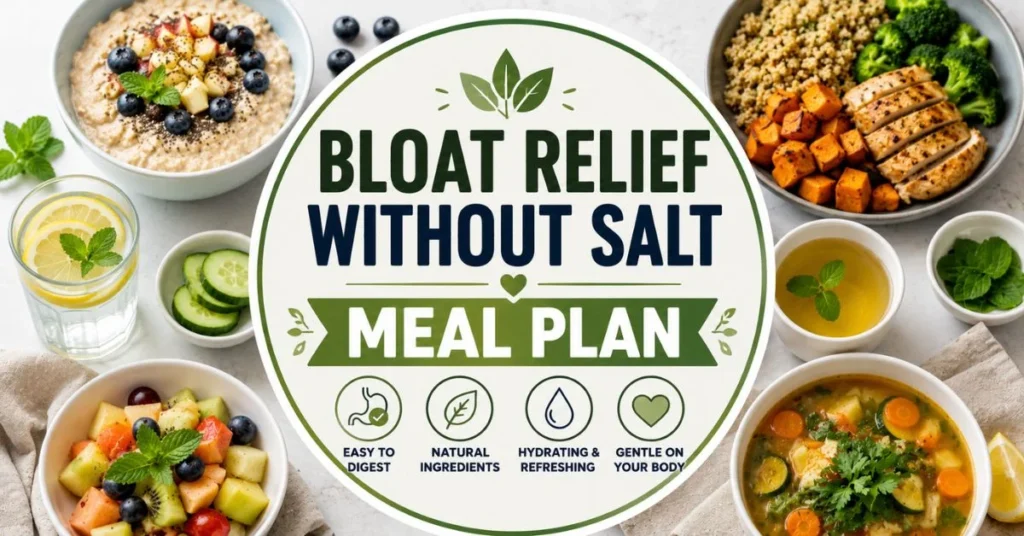
Simple Daily Reset for Water Retention and Digestive Comfort
This gentle one-day meal plan is designed to help support natural bloat relief without salt. It focuses on hydration, potassium-rich foods, light meals, and digestion-friendly ingredients that may help reduce puffiness and discomfort caused by excess sodium.
Bloat Relief Without Salt
Lemon Herb Chicken and Hydrating Wellness Meal Plan
Prep Time: 15 minutes
Cook Time: 30 minutes
Total Time: 1 Day Plan
Yield: 1 Daily Meal Plan
Category: Wellness Meal
Method: Blending, Boiling, Steaming
Cuisine: Healthy Living
Ingredients
Morning Hydration
- 16 oz warm water
- Juice of ½ fresh lemon
Breakfast
- ½ cup rolled oats
- 1 medium banana, sliced
Morning Snack
- 1 cup unsweetened coconut water
- ¼ cup roasted pumpkin seeds
Lunch Salad Bowl
- 4 oz grilled chicken breast
- 2 cups mixed greens
- ½ avocado, sliced
- ¼ cucumber, sliced
- 1 tablespoon apple cider vinegar
- 1 teaspoon extra virgin olive oil
Dinner
- ½ cup cooked white rice or quinoa
- ½ cup steamed carrots
- Herb-baked chicken seasoned with rosemary and thyme
- Fresh lemon juice for serving
Daily Hydration
- 64 oz room-temperature water throughout the day
Herbal Tea for Digestive Comfort
- 1 teaspoon fennel seeds
- ½ teaspoon dried peppermint leaves
- 3 thin slices fresh ginger
- 10 oz hot water
Instructions
Step 1: Start the Morning With Lemon Water
After waking up, drink warm water mixed with fresh lemon juice. This helps support hydration and may help the body feel refreshed after salty meals.
Step 2: Eat a Balanced Breakfast
Prepare oatmeal with water and top it with sliced banana for natural sweetness and potassium.
Step 3: Choose a Hydrating Snack
Drink coconut water and enjoy pumpkin seeds for minerals and healthy fats.
Step 4: Build a Fresh Lunch Bowl
Combine mixed greens, grilled chicken, avocado, and cucumber in a large bowl. Mix apple cider vinegar and olive oil for a light dressing.
Step 5: Stay Hydrated
Sip water steadily throughout the day instead of drinking large amounts at once.
Step 6: Add Gentle Movement
Take a light 15–20 minute walk to support circulation and fluid balance.
Step 7: Prepare a Light Dinner
Serve herb-seasoned chicken with white rice or quinoa and steamed carrots. Finish with fresh lemon juice for extra flavor without excess sodium.
Step 8: Make Herbal Tea if Needed
Steep fennel seeds, peppermint leaves, and ginger in hot water for 10 minutes. Strain and sip slowly to help calm digestion.
Helpful Notes
- This meal plan may help reduce temporary water retention caused by salty foods.
- For gas-related bloating, focus on herbal teas and digestion-friendly foods.
- Avoid heavily processed meals and carbonated drinks during the reset.
- Persistent or severe bloating should always be discussed with a healthcare professional.
Estimated Nutrition Information
| Nutrient | Amount |
|---|---|
| Calories | 1450 |
| Carbohydrates | 165g |
| Protein | 65g |
| Fat | 62g |
| Fiber | 28g |
| Sugar | 48g |
| Sodium | 350mg |
Beyond Food: Simple Lifestyle Habits That Help Reduce Bloating
Bloat relief without salt is not only about the foods you eat. Your hydration habits, movement, stress levels, and daily routine can also affect how your stomach and body feel throughout the day.
Small lifestyle changes can support digestion naturally and help reduce puffiness, water retention, and stomach discomfort.
Hydration Habits That Support Bloat Relief
Many people drink large amounts of water all at once when they feel bloated. However, steady hydration throughout the day often works better for digestion and fluid balance.
Drink Water Slowly Throughout the Day
Instead of chugging water quickly, try sipping water regularly from morning to evening. This may help your body process fluids more comfortably and support natural sodium balance.
Choose Room-Temperature or Warm Water
Warm or room-temperature water can feel gentler on the stomach for some people. It may also support smoother digestion compared to very cold drinks.
Helpful hydration choices include:
- Warm lemon water
- Herbal teas
- Coconut water
- Plain filtered water
Avoid sugary sodas and heavily salted sports drinks, which may increase bloating.
Gentle Movement Can Help Reduce Puffiness
You do not need intense exercise to support digestion. Light movement is often enough to help the body feel better after meals.
Easy Movements for Bloating Relief
Short Walks
A gentle 10–15 minute walk after eating may support digestion and circulation.
Knees-to-Chest Stretch
Lie on your back and gently pull your knees toward your chest. This stretch may help release stomach pressure and gas.
Seated Spinal Twist
A simple seated twist can help encourage comfortable digestion and body movement.
Light daily activity can also help reduce the sluggish feeling that sometimes comes with water retention.
The Connection Between Stress and Bloating
Stress can affect digestion more than many people realize. When the body feels tense or anxious, digestion may slow down, leading to bloating and stomach discomfort.
Try Deep Belly Breathing
Simple breathing exercises may help calm the nervous system and support relaxation.
Here is an easy method:
- Sit comfortably and relax your shoulders.
- Slowly breathe in through your nose.
- Let your belly rise as you inhale deeply.
- Pause briefly.
- Exhale slowly through your mouth.
Repeat for 1–2 minutes when feeling bloated or stressed.
Healthy Daily Habits for Less Bloating
These small habits may also help support long-term digestive comfort:
- Eat meals slowly
- Avoid overeating
- Limit heavily processed foods
- Get enough sleep
- Reduce excess sodium intake
- Stay physically active daily
Combining healthy meals with simple lifestyle habits can make a big difference in supporting natural bloat relief without salt.
When You Should Stop Home Remedies and Talk to a Doctor

Most bloating is temporary and can improve with healthy eating, hydration, and simple lifestyle changes. However, some symptoms may be a sign of a more serious health issue and should not be ignored.
If bloating becomes severe, frequent, or unusual, it is important to speak with a healthcare professional.
Signs You Should Seek Medical Advice
Watch for symptoms such as:
- Severe or ongoing stomach pain
- Sudden or unexplained weight loss
- Blood in the stool
- Major changes in bowel habits
- Constant bloating that keeps getting worse
- Swelling that does not improve with dietary changes
- Frequent nausea or vomiting
- Difficulty eating because of stomach discomfort
These symptoms may be linked to digestive conditions, food intolerances, hormonal issues, or other medical concerns that require proper evaluation.
Listen to Your Body
Occasional bloating after salty or heavy meals is common, but long-lasting discomfort should never be ignored. Getting medical advice early can help identify the cause and provide the right treatment if needed.
It is always better to check persistent symptoms instead of relying only on home remedies.
FAQs About Bloat Relief Without Salt
What helps with bloat relief without salt?
Drink more water and eat fresh foods. Potassium-rich foods may help reduce water retention. Gentle exercise and herbal tea can also support digestion.
Can too much salt cause bloating?
Yes, extra salt can make the body hold water. This may lead to puffiness and stomach discomfort. Processed foods are often high in sodium.
What foods help reduce bloating?
Foods like cucumber, banana, ginger, and papaya may help. Fresh vegetables and simple meals are easier to digest. Avoid heavily processed foods when possible.
How can I flavor food without salt?
Use lemon juice, herbs, spices, and vinegar. Fresh ingredients add natural flavor without extra sodium. Garlic, rosemary, and basil are great options.
What drinks may help with bloating?
Warm lemon water and herbal teas may help digestion. Peppermint and ginger tea are popular choices. Coconut water may also support hydration.
How long does salt bloating last?
Mild bloating may improve within one or two days. Drinking water and eating low-sodium foods can help. Everyone’s body responds differently.
When should I see a doctor for bloating?
Talk to a doctor if bloating becomes severe or constant. Seek help for pain, blood in stool, or sudden weight loss. Persistent symptoms should not be ignored.
Conclusion
Finding natural bloat relief without salt does not have to feel difficult or restrictive. Simple changes like eating fresh foods, drinking enough water, using herbs instead of excess sodium, and staying active can help your body feel lighter and more comfortable. Understanding the difference between water retention and digestive bloating also makes it easier to choose the right relief methods for your needs.
Small daily habits often lead to the best long-term results. Try adding a few of these gentle tips into your routine and notice how your body responds. For more wellness ideas and healthy recipes, explore our other easy digestive-friendly guides.
Related Articles You May Like: My Mix Recipes