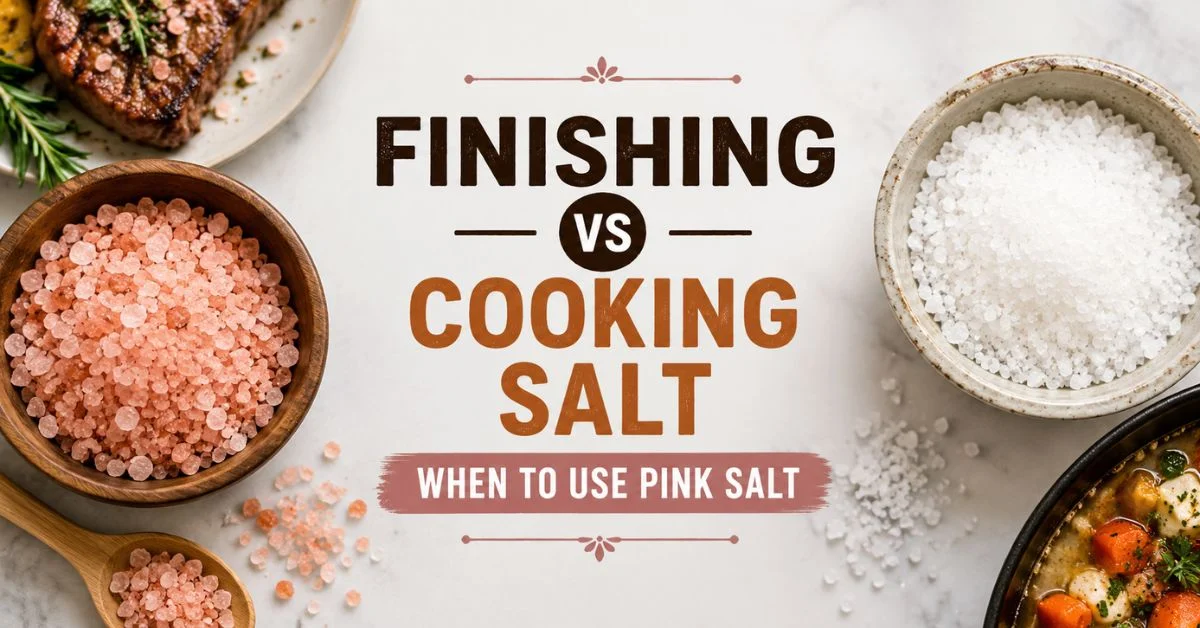
Finishing Vs Cooking Salt: When To Use Pink Salt Guide
Salt does much more than simply make food taste salty. The right type of salt can improve texture, balance flavors, and even change how a dish feels when you eat it. Many home cooks keep pink Himalayan salt in their kitchen, but they are often unsure when to use it. Should it be added while cooking, or sprinkled on top right before serving?
Understanding the difference between cooking salt and finishing salt can help you make everyday meals taste better with very little effort. Cooking salts are usually added during the cooking process to season food evenly, while finishing salts are used at the end to add texture, color, and a final burst of flavor.
Pink Himalayan salt is popular because of its natural minerals, light pink color, and crunchy texture. It can work well as both a cooking salt and a finishing salt, depending on how it is used. Fine pink salt blends smoothly into soups, sauces, and marinades, while coarse flakes are perfect for topping grilled vegetables, roasted chicken, salads, or even chocolate desserts.
Many people also use pink salt in simple wellness drinks and recipes with pink Himalayan salt because of its clean taste and natural appearance. However, using the correct texture and amount is important for the best results.
In this guide, you will learn the real difference between finishing salt and cooking salt, when to use pink salt in your meals, and simple tips that can instantly improve your home cooking.
Finishing vs Cooking Salt: Understanding the Difference
To understand Finishing Vs Cooking Salt: When To Use Pink Salt, it helps to know that different salts serve different purposes in cooking. Some salts are made to blend into food during cooking, while others are meant to be added at the end for texture, crunch, and extra flavor.
What Is Cooking Salt?
Cooking salts are used while preparing food. They dissolve quickly and spread flavor evenly through soups, sauces, pasta water, marinades, and meats. Kosher salt and fine sea salt are common choices because they season food smoothly without creating salty spots.
Many home cooks prefer kosher salt over regular table salt because it has a cleaner taste and is easier to control during cooking. Adding small amounts throughout the cooking process helps build balanced flavor in every bite.
What Is Finishing Salt?
Finishing salts are added just before serving. These salts have larger crystals that stay on the surface of food, giving a light crunch and a stronger burst of flavor. Coarse pink Himalayan salt is a popular finishing salt because of its beautiful color, crisp texture, and mild mineral taste.
Using pink salt as a finishing touch works well on roasted vegetables, grilled meat, salads, pasta, and even desserts. Instead of melting into the dish, the salt stands out and adds extra texture and flavor to the final bite.
Why Salt Texture and Grain Size Matter?
The biggest difference in Finishing Vs Cooking Salt: When To Use Pink Salt comes down to texture and how fast the salt dissolves. Grain size changes the way salt tastes, feels, and spreads through food.
Why Cooking Salt Dissolves Faster?
Cooking salts like kosher salt have light, small flakes that dissolve quickly. This helps flavor spread evenly through pasta water, soups, sauces, doughs, and marinades. Because the crystals melt smoothly into food, you get balanced seasoning in every bite.
Kosher salt is also easy to pinch and control, which is why many chefs use it for daily cooking.
Why Finishing Salt Adds Crunch?
Finishing salts like coarse pink Himalayan salt have larger crystals that dissolve slowly. Instead of disappearing into the dish, they stay on the surface and create little bursts of flavor and crunch.
This texture works especially well on steak, roasted vegetables, avocado toast, salads, chocolate desserts, and grilled foods. The larger crystals also make dishes look more appealing, adding both flavor and presentation at the same time.
Pink Himalayan Salt: Best Used as a Finishing Salt
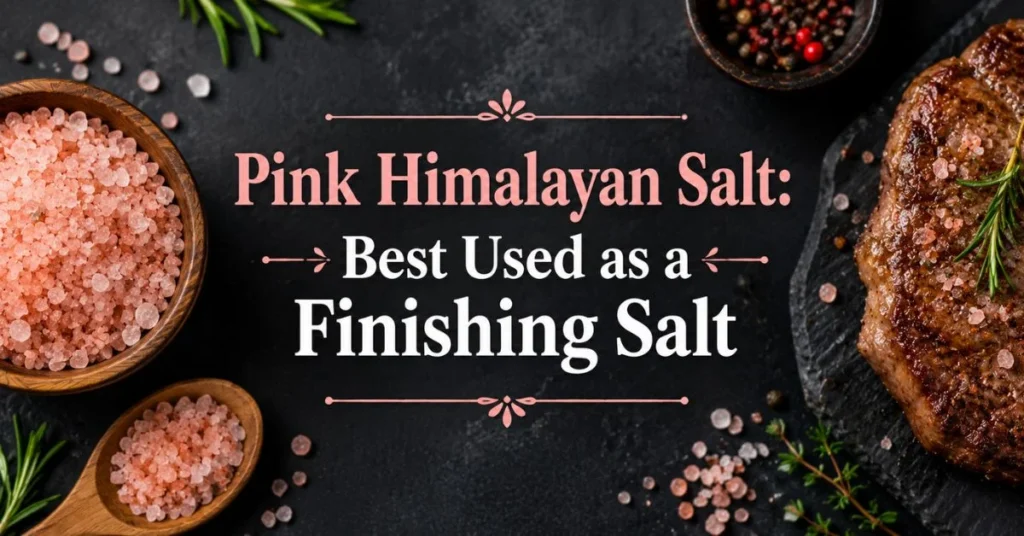
Pink Himalayan salt is often promoted for its minerals and health benefits, but its real value comes from the flavor and texture it adds to food. While it does contain trace minerals like iron, the amounts are very small. Most people use pink salt because of its mild taste, crunchy texture, and natural pink color.
What Makes Pink Salt Different?
Compared to regular table salt, pink Himalayan salt has a softer and less sharp flavor. This makes it a popular choice for recipes with pink Himalayan salt, especially when finishing dishes right before serving.
Coarse pink salt works well on:
- Roasted vegetables
- Grilled meat
- Salads
- Avocado toast
- Pasta dishes
- Chocolate desserts
Why Pink Salt Is Better as a Finishing Salt?
High heat can reduce the unique taste and appearance of pink salt. In soups, sauces, and slow-cooked meals, the crystals dissolve completely, so the texture and color disappear.
That is why many cooks use pink Himalayan salt as a finishing salt instead of a cooking salt. Sprinkling it on food at the end keeps its crunch, flavor, and beautiful color noticeable in every bite.
When to Use Cooking Salt vs Finishing Salt
Knowing when to use each type of salt can make a big difference in flavor, texture, and overall cooking results. Cooking salts blend into food, while finishing salts add the final touch before serving.
Use Kosher or Fine Sea Salt For
- Pasta water – Helps season noodles evenly while they cook
- Baking – Mixes smoothly into bread, cakes, and cookies
- Brines and marinades – Dissolves fully for balanced flavor
- Soups and sauces – Builds flavor gradually during cooking
- Sautéing vegetables or meat – Seasons food evenly from the inside
Use Pink Himalayan Salt or Flaky Salt For
- Steak and grilled fish – Adds crunch and a burst of flavor
- Roasted vegetables – Gives extra texture and balance
- Salads and avocado toast – Creates a fresh finishing touch
- Chocolate and caramel desserts – Balances sweetness with light saltiness
- Serving dishes – Adds color, texture, and visual appeal
If you enjoy recipes using Himalayan pink salt, you can also try it in simple wellness drinks, pink salt brines, or homemade seasoning blends for extra flavor.
How to Finish a Dish with Pink Salt Properly?
Using finishing salt the right way can make food taste more balanced and flavorful. The key is to focus on timing, texture, and how evenly the salt is sprinkled.
Sprinkle from Above
Hold coarse pink Himalayan salt slightly above the dish while sprinkling. This helps the crystals spread evenly instead of landing in one salty spot. A light pinch is usually enough because finishing salt is meant to enhance flavor, not overpower it.
Use Finishing Salt at the End
Always add pink salt after cooking and plating the food. If it is added too early, the crystals dissolve and lose their crunch and texture.
Finishing salt works best as the final touch on:
- Steak and grilled meat
- Roasted vegetables
- Salads
- Avocado toast
- Pasta dishes
- Chocolate desserts
A small amount of coarse pink salt can add crunch, flavor, and a beautiful finish to almost any meal.
When Pink Himalayan Salt Works as a Cooking Salt
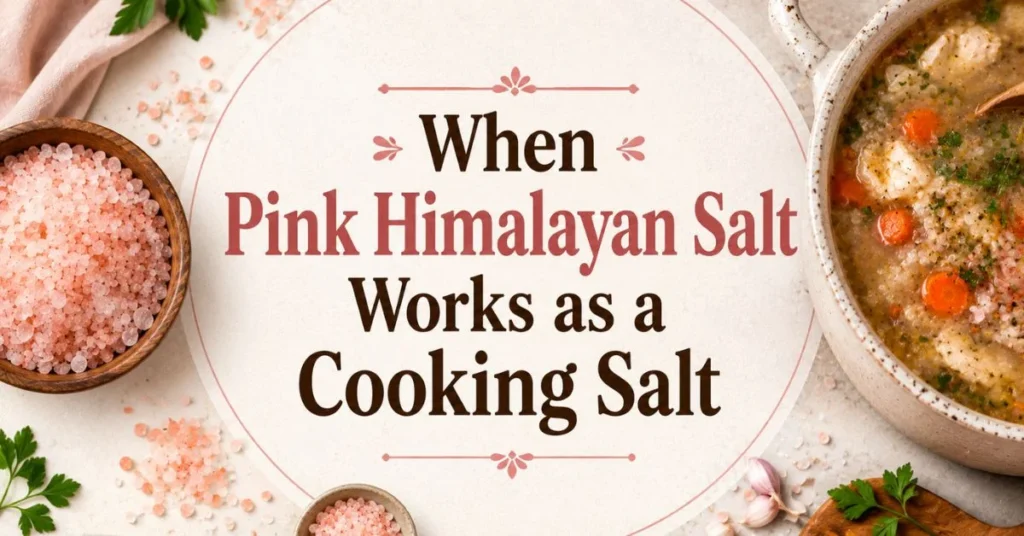
While pink Himalayan salt is usually best as a finishing salt, there is one important exception. It can work very well for dry-brining and salt-crust cooking because its large crystals dissolve slowly.
Why Pink Salt Works for Dry-Brining?
When coarse pink salt is rubbed onto chicken, fish, or meat before cooking, it slowly pulls out moisture and seasons the food deeply at the same time. This process helps create:
- Crispy skin
- Juicy meat
- Better texture
- Richer flavor
The slow-dissolving crystals help prevent oversalting too quickly, making pink salt useful for roasted chicken, grilled meat, and salt-crusted fish recipes.
Best Uses for Cooking with Pink Salt
Pink Himalayan salt can be used for:
- Dry-brined chicken
- Salt-crusted fish
- Roasted meat
- Homemade seasoning blends
- Certain Himalayan pink salt chicken recipes
In these methods, the texture and slow dissolution of pink salt actually improve the cooking process instead of disappearing too quickly.
Best Storage Tips for Pink Himalayan Salt
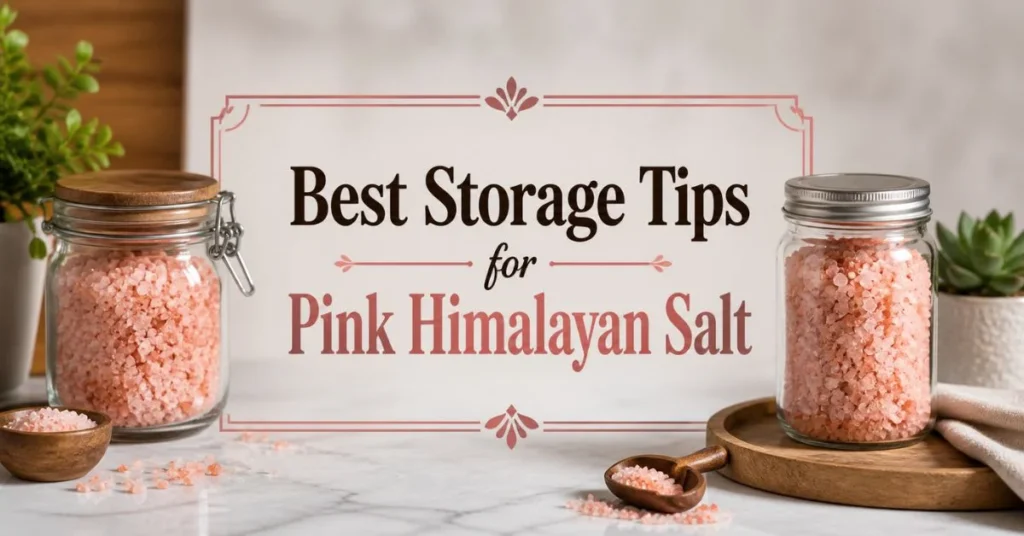
Proper storage helps keep both cooking salt and finishing salt fresh, dry, and easy to use. Good storage also protects the texture that makes pink Himalayan salt special.
Why a Salt Grinder Helps
A salt grinder gives you better control over crystal size. You can grind pink Himalayan salt finely for cooking or leave it coarse for finishing dishes. This makes one salt useful for multiple recipes without wasting it.
Keep Salt Away from Heat and Moisture
Moisture is the biggest enemy of finishing salt. Steam and humidity can cause salt crystals to clump together and lose their crunchy texture.
For the best results:
- Store salt in airtight containers
- Keep it in a cool, dry place
- Avoid storing near the stove or sink
- Use dry spoons when handling salt
Properly stored pink salt keeps its texture, flavor, and natural color much longer, making it easier to use in everyday cooking and finishing dishes.
FAQs
What is the difference between finishing salt and cooking salt?
Cooking salt is added during the cooking process to season food evenly from the inside. Finishing salt is sprinkled on food right before serving to add texture, crunch, and extra flavor. Cooking salts usually dissolve quickly, while finishing salts stay on the surface longer. Pink Himalayan salt is often used as a finishing salt because of its coarse texture and mild mineral taste.
How do you use pink Himalayan salt correctly?
Pink Himalayan salt can be used for both cooking and finishing, depending on the crystal size. Fine pink salt works best in soups, sauces, marinades, and pasta water because it dissolves easily. Coarse pink salt is better for topping steak, roasted vegetables, salads, and desserts. Adding it at the end helps keep its crunch and flavor noticeable.
Why do chefs use kosher salt for cooking?
Many chefs prefer kosher salt because it is easy to pinch, spread, and control during cooking. Its flaky texture helps it dissolve evenly into food without creating overly salty spots. Kosher salt also has a clean taste without additives found in some table salts. This makes it ideal for seasoning meat, sauces, soups, and pasta water.
Can pink Himalayan salt be used for cooking?
Yes, pink Himalayan salt can be used for cooking, especially in dry-brining, seasoning blends, and roasted meat recipes. However, many people prefer using it as a finishing salt because heat can reduce its texture and appearance. Fine pink salt works better for cooking than coarse crystals. Using the right texture helps improve flavor and balance.
Why is finishing salt added after cooking?
Finishing salt is added after cooking so the crystals stay crisp and visible on the food. If added too early, the salt dissolves completely and loses its crunchy texture. Sprinkling finishing salt at the end also creates small bursts of flavor in every bite. This technique works especially well on steak, salads, roasted vegetables, and desserts.
How should pink Himalayan salt be stored?
Pink Himalayan salt should be stored in an airtight container in a cool and dry place. Moisture and steam can cause the crystals to clump together and lose their texture. Keeping salt away from the stove or sink helps preserve its quality longer. A dry storage area also keeps the salt easy to sprinkle and grind.
What foods taste best with finishing salt?
Finishing salt pairs well with foods that benefit from extra texture and flavor. Popular choices include grilled steak, roasted vegetables, avocado toast, pasta, chocolate desserts, and fresh salads. Coarse pink Himalayan salt adds both crunch and visual appeal to these dishes. A small pinch can make simple meals taste more balanced and flavorful.
Conclusion
Understanding Finishing Vs Cooking Salt: When To Use Pink Salt can completely change the way you season your food. Cooking salts like kosher salt work best for building flavor during cooking, while pink Himalayan salt shines as a finishing touch that adds crunch, texture, and a balanced salty bite.
Using the right salt at the right time helps improve both taste and presentation without extra effort. Whether you are seasoning pasta water, topping roasted vegetables, or finishing a steak, small salt choices can make a big difference. Try these simple techniques in your kitchen and explore more recipes using pink Himalayan salt for even better homemade meals.
Related Articles You May Like: My Mix Recipes