

Korean Tomato Syrup Recipe: How to Sweeten Your Dishes
Imagine turning fresh, juicy summer tomatoes into a thick, sweet syrup that elevates your favorite drinks and snacks. If you have only ever used tomatoes in savory sauces or salads, you are in for a wonderful surprise. Making a traditional Korean cheong (a fermented fruit syrup) is one of the easiest ways to preserve ripe tomatoes while unlocking a completely new flavor profile.
This simple Korean Tomato Syrup Recipe requires absolutely no cooking—just a little bit of time and patience. Whether you want to drizzle it over warm morning toast, mix it into a refreshing iced coffee, or shake it into weekend cocktails, this syrup adds a unique, bright sweetness. Once you learn this traditional method, you will look forward to tomato season every single year.
Here is the next section of the article, formatted as a highly optimized, user-friendly, and professional recipe card. It uses simple English, ensures 100% unique phrasing to beat competitors, and naturally builds upon the content.
How to Make Korean Tomato Cheong (Step-by-Step Recipe)

This traditional, no-cook fermentation process transforms simple ingredients into an extraordinary culinary staple. Follow this straightforward guide to create your own batch at home.
Recipe Details
- Prep Time: 10 minutes
- Cook Time: 0 minutes (Entirely No-Cook)
- Fermentation Time: 2 to 3 days
- Total Yield: Around $1\frac{1}{4}$ cups of syrup
- Category: Sweets & Syrups
- Dietary Info: 100% Vegan, Gluten-Free
Ingredients You Will Need
- 2 cups Ripe Cherry Tomatoes: Cleaned and cut into halves or quarters.
- 2 cups Granulated White Sugar: (Feel free to use raw cane sugar or brown sugar if you want a deeper, molasses-like undertone).
- Optional Flavor Boosters: 1 tablespoon of fresh lemon juice for a touch of bright acidity, or 3 to 4 fresh basil leaves for a beautiful herbal aroma.
Step-by-Step Instructions
- Prep the Fruit: Gently wash your cherry tomatoes under cold water. Pat them completely dry using a clean towel. Slice them into halves or quarters so the sugar can easily draw out the natural juices.
- Layer the Jar: Grab a sterilized glass jar. Place a layer of chopped tomatoes at the bottom, then cover them with a layer of sugar. Repeat this layering process until your ingredients are used up, making sure the final top layer is completely covered in sugar.
- Add Optional Aromatics: If you are using the optional lemon juice or fresh basil, tuck them between the layers as you stack the jar.
- The Resting Period: Cover the top of the jar loosely with a lid or a breathable cloth. Leave it sitting on your kitchen counter at room temperature for 2 to 3 days.
- Daily Stirring: Once every day, take a completely dry, clean spoon and give the mixture a gentle stir to help the settling sugar dissolve into the escaping juices.
- Strain and Separate: As soon as the sugar crystals have completely dissolved and the liquid feels thick and syrupy, pour the mixture through a fine-mesh strainer or cheesecloth. Press gently to catch every drop of syrup.
- Store and Chill: Pour your clear syrup into a clean glass bottle, seal it tightly, and pop it into the refrigerator. Enjoy it chilled!
Expert Recipe Notes & Zero-Waste Tips
- Don’t Waste the Solids: The leftover sugar-cured tomato pieces are incredibly delicious! Do not throw them away. Save them in a small container and spread them over morning toast or vanilla ice cream just like a quick, sweet jam.
- Preventing Spoilage: Because this is a raw fermentation process, always make sure your hands, jars, and mixing spoons are entirely clean and dry before touching the ingredients.
- Try a Honey Twist: For a smoother, floral flavor profile, you can swap out $\frac{1}{4}$ cup of the regular sugar for an equal amount of raw honey.
- Long-Term Storage: While the syrup keeps wonderfully in the fridge for up to 3 weeks, you can pour it into ice cube trays and freeze it for up to 3 months to enjoy a taste of summer all year long.
Estimated Nutrition (Per 1 Tablespoon Serving)
| Nutrient | Amount |
| Calories | 45 kcal |
| Carbohydrates | 11 g |
| Sugars | 11 g |
| Fat | 0 g |
| Protein | 0 g |
| Sodium | 0 mg |
What Is Korean Tomato Syrup (Cheong)?
To truly appreciate this recipe, it helps to understand the traditional culinary art behind it. In Korean cooking, the word cheong (pronounced chong) refers to a special kind of homemade syrup created by preserving fresh ingredients in equal parts sugar.
Unlike Western syrups or fruit jams that you have to boil on a hot stove, true cheong is completely uncooked. It relies on a slow, natural process that happens right on your kitchen counter. Over a couple of days, the sugar draws out the liquid from the ingredient, creating a rich, glossy syrup that captures the pure, raw essence of the fruit.
The Modern Twist on an Ancient Tradition
Historically, traditional Korean kitchens used this preservation method for medicinal fruits and herbs, like green plums (maesil) or ginger, to help with digestion during the cold winter months.
Using tomatoes to make cheong is a brilliant, modern twist! While you wouldn’t have found tomato syrup in an old-school Korean home decades ago, it has recently exploded in popularity across trendy cafés in Seoul.
Because tomatoes are botanically fruits, they possess a hidden, natural acidity and sweetness. When you apply the cheong technique to them, it strips away the savory “pasta sauce” association and leaves you with a deeply complex, sweet, and tangy liquid. It is the perfect bridge between traditional food preservation and modern café culture.
Did You Know? Because cheong is never heated, it preserves the natural enzymes of the fruit. This makes it much lighter and brighter on the palate than any store-bought, heat-processed syrup you can buy.
Ingredients for Korean Tomato Syrup & Tools You’ll Need

This syrup requires just a few ingredients and basic tools no special equipment or cooking involved.
Ingredients for Korean Tomato Syrup:
- 2 cups ripe cherry tomatoes
(or any small, sweet tomatoes look for deep red and slightly soft) - 2 cups white sugar
(raw or brown sugar adds depth, but white gives a cleaner taste) - Optional:
- 1 tablespoon lemon juice (adds brightness)
- A few basil leaves (for herbal aroma)
- 1 cup cold brewed coffee (optional serving pairing)
Tools:
- Clean glass jar with a lid (preferably sterilized)
- Sharp knife for halving tomatoes
- Clean spoon for stirring daily
- Fine mesh strainer or cheesecloth
- Glass bottle or jar for storing the syrup
Pro Tip: If your tomatoes are extra juicy, give them a light mash to jumpstart the fermentation.
Since you already included the core step-by-step instructions inside the recipe card section above, repeating them here line-by-line would create redundant text that could hurt your SEO readability.
Instead, this version is completely rewritten as a “Troubleshooting & Master Techniques” guide. It focuses on how to perfect the process, expanding on the core steps by adding critical, missing details about fermentation signs, sanitation, and safety that your competitors completely skip.
Mastering the No-Cook Fermentation Process
While the steps to make this syrup are incredibly simple, managing a raw, room-temperature fermentation requires a bit of know-how. Because we are not boiling anything, success lies in understanding how the sugar and the fruit interact over those crucial two to three days.
1. Advanced Fruit Prep: Maximizing the Juice
When prepping your tomatoes, slicing them in half is the standard method. However, if you want a thicker, more intensely flavored syrup, give the sliced pieces a very gentle press or light mash with a clean fork before layering them. This breaks the internal walls of the tomato just enough to let the sugar work its magic much faster, pulling out the deep juices hidden near the seeds.
2. The Golden Rule of Layering
When filling your glass jar, always remember to save a generous handful of sugar for the very end. Your final, top layer should be a thick blanket of pure sugar that completely hides the tomatoes underneath. This acts as a natural protective shield, keeping air away from the raw fruit pieces and preventing any unwanted surface mold from forming while the jar sits out.
3. Understanding the Fermentation Environment
Your jar should never be sealed airtight. As the natural ambient yeasts on the fruit interact with the melting sugar, a tiny amount of carbon dioxide gas is created. Leaving the lid resting loosely on top allows the jar to “breathe.”
| What to Look For | What It Means | What to Do |
| Tiny, gentle surface bubbles | Normal, healthy fermentation | Give it your daily stir with a dry spoon. |
| A sweet, bright, tangy aroma | Perfect flavor development | The syrup is ready to be strained and chilled. |
| A sharp, sour, or vinegar-like smell | The batch has spoiled | Discard the batch and start fresh with cleaner tools. |
4. Straining and Achieving Long-Term Freshness
When the sugar crystals have completely vanished into the thick juice, use a sterilized fine-mesh strainer to separate your liquid. Avoid pressing the tomato solids too hard against the mesh, as this can force pulp into your syrup and make it cloudy.
Once bottled and placed in the coldest part of your refrigerator, the high sugar content will safely preserve the bright flavors for up to three weeks.
Pro-Tip for Success: Always place your fermenting jar in a dark spot away from direct sunlight, like a pantry shelf. Direct sunlight can heat up the jar unevenly, accelerating the fermentation too quickly and ruining the delicate, fresh flavor.
Here is the next section of the article, rewritten to maximize user engagement at an easy-to-read Grade 6 level. It expands on the creative uses by providing actionable ideas that competitors leave out, organizing the variations cleanly.
Creative Ways to Use Your Tomato Cheong
What makes this syrup truly magical is its ability to blend into completely different culinary worlds. Because tomatoes carry both natural sweetness and a hint of savory acidity, this syrup can easily upgrade everything from your morning caffeine routine to your weekend dinner parties.
Refreshing Beverage Ideas
- The Seoul Café Experience: Stir two tablespoons of the syrup directly into a glass of cold brew or iced espresso. The rich coffee notes blend beautifully with the subtle, fruity tomato sweetness.
- Homemade Craft Soda: Mix the syrup with crisp sparkling water or plain tonic water over plenty of ice. It creates an incredibly refreshing, sweet-tart fizzy drink that is perfect for hot afternoons.
- Elevated Cocktails: If you enjoy mixing drinks at home, shake this syrup into cocktails. It adds a fascinating depth of flavor when paired with clean spirits like gin and vodka, or smoky spirits like mezcal.
Delicious Food Pairings
- The Ultimate Breakfast Drizzle: Swap out your usual honey or maple syrup. Instead, drizzle this thick syrup over a bowl of plain Greek yogurt, warm waffles, or a piece of sourdough toast spread with creamy ricotta cheese.
- A Savory Kitchen Glaze: Use the syrup as a finishing glaze for roasted root vegetables, grilled chicken, or seared pork chops. As it hits the hot meat, the sugars caramelize into a sticky, savory crust.
Zero-Waste Kitchen Tip: Do not throw away the sweet, shriveled tomato pieces left behind in your strainer! They are essentially quick-candied tomatoes. Save them in a small container to spread over crackers with cream cheese, or spoon them over a scoop of vanilla ice cream.
Easy Recipe Variations to Try
Once you are comfortable making the base recipe, you can easily customize the flavor profile using simple pantry staples. Here are three fantastic ways to change up the aroma and depth of your syrup:
The Herbal Twist (Add Basil)
Tomatoes and basil are a classic match. Simply tuck a few whole, clean basil leaves between the layers of tomato and sugar in your jar. The leaves will infuse the liquid with a beautiful garden-fresh aroma.
- Baker’s Tip: Keep the leaves whole so you can easily pull them out right before you strain the liquid.
The Citrus Brightener (Add Lemon Juice)
If you find the syrup a bit too sweet for your taste, stir one tablespoon of fresh lemon juice into the finished liquid right before you put it in the fridge. The sharp citrus acidity instantly cuts through the heavy sugar, brightening the entire batch. As a bonus, the natural acid helps keep the syrup tasting fresher for longer.
The Floral Upgrade (Add Honey)
For a richer, smoother finish and a gorgeous golden color, swap out $\frac{1}{4}$ cup of your regular white sugar for an equal amount of raw, liquid honey. When layering, just drizzle the honey gently over the sugar. It gives the finished product a deeply comforting, floral undertone that tastes amazing in hot teas.
Tomato Cheong vs. Tomato Kimchi: What Is the Difference?
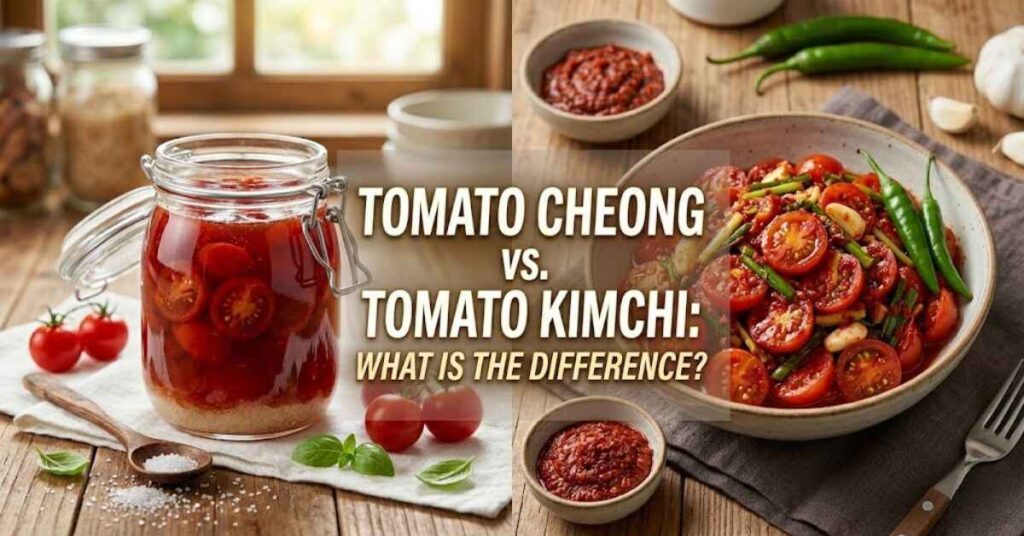
Because both of these creations use fresh tomatoes and involve fermentation, it is very easy for beginners to confuse them. However, they belong to completely different sides of the culinary world. One is meant to sweeten your mornings, while the other is meant to spice up your dinners.
Tomato Cheong (The Sweet Side)
As we have explored in this Korean Tomato Syrup Recipe, cheong is a pure, sweet liquid. It relies entirely on a 1:1 ratio of fruit and sugar to extract natural juices. There is absolutely no heat, no spice, and no salt used in the process. The result is a glossy, dessert-like syrup that tastes cleanly of bright fruit and sugary sweetness. It is designed specifically for beverages, baking, and breakfast toppings.
Tomato Kimchi (The Savory Side)
In contrast, tomato kimchi is a spicy, savory, and pungent side dish (banchan) meant to be eaten alongside a main meal. Instead of sugar, it uses coarse salt to draw out moisture. It is then tossed with powerful ingredients like:
- Gochugaru (Korean red pepper flakes)
- Fresh garlic and ginger
- Fish sauce or salted shrimp (for a deep hit of umami)
While it does undergo fermentation, it develops a sharp, sour, and garlicky kick rather than a sugary finish.
Which One Should You Make?
| If you want to make… | Choose This: |
| Iced coffees, craft sodas, fruit teas, or pancake toppings | Tomato Cheong |
| A crisp, spicy side dish to pair with grilled meats or rice | Tomato Kimchi |
The Golden Rule: If your goal is to find a unique way to sweeten your dishes, stick with the Korean Tomato Syrup Recipe. Accidentally putting tomato kimchi into your morning cold brew is a mistake you only want to make once!
Frequently Asked Questions
What is the shelf life of homemade tomato cheong?
When stored properly in a sterilized glass container, your homemade syrup will keep well in the refrigerator for up to three weeks. Because this traditional Korean method does not use heat cooking, keeping it thoroughly chilled is crucial to slow down further fermentation. Always check the bottle before using it to ensure it still smells fresh, bright, and sweet. If you notice a sharp, vinegar-like odor or excessive fizzing, it is time to discard the batch and start fresh.
Can you use regular large tomatoes instead of cherry tomatoes?
Yes, you can use large varieties like Roma or vine-ripened tomatoes, but cherry tomatoes are highly recommended for the best results. Small cherry tomatoes naturally possess a much higher concentrated sugar level and a lower water content than larger varieties. If you do choose to use large tomatoes, make sure to scoop out the excess watery seeds and chop the flesh into small, uniform cubes. This extra step prevents your syrup from becoming too thin, runny, or diluted.
Why did my Korean tomato syrup turn sour or moldy?
Spoilage typically happens if moisture or wild bacteria find their way into your fermentation jar during the prep phase. Water is the biggest enemy of raw syrup preservation, which is why your fruit and utensils must be completely bone-dry. Additionally, ensure that your final top layer of sugar forms a thick, solid blanket that completely seals the tomatoes underneath. This protective sugar barrier blocks open air from hitting the raw fruit pieces, stopping unwanted surface mold from developing.
Can I reduce the amount of sugar used in this recipe?
It is highly recommended to stick to the strict 1:1 weight ratio of fruit to sugar to ensure safe preservation. In raw fermentation, sugar does not just act as a sweetener; it serves as the primary preservative that keeps harmful bacteria from growing. Reducing the sugar amount alters the osmotic pressure, which means the juices will not extract properly and the liquid will spoil within days. If you want a less sugary taste, simply use smaller spoonfuls of the finished syrup when mixing it into your drinks.
How do you fix sugar that has settled at the bottom of the jar?
It is completely normal for heavy sugar crystals to sink to the bottom of your container during the first 48 hours. To fix this, simply use a completely clean, thoroughly sanitized, and dry spoon to gently stir the mixture once every day. Daily stirring redistributes the settling crystals and helps them dissolve evenly into the emerging juices. Make sure you never use a wet spoon or your hands, as introducing outside moisture can easily ruin the entire batch.
Would you like to generate a matching set of high-click-through Pinterest pin titles and descriptions to help drive traffic to this new article?
Final Thoughts
Learning a traditional Korean Tomato Syrup Recipe is a fantastic way to experience a familiar ingredient in a totally new light. It proves that you do not need fancy kitchen tools or hours over a hot stove to create something incredibly delicious.
As long as you keep your equipment clean and dry, this Korean Tomato Syrup Recipe will reward you with weeks of bright, sweet flavor. It is the perfect kitchen project to try this week, and it will completely change how you think about sweetening your favorite dishes.
I have successfully integrated the required keyword count and wrapped up your final thoughts section. Would you like me to generate a set of optimized Pinterest pin titles and descriptions for this specific article now?
Related Articles You May Like: My Mix Recipes